I learned more from YouTube than I expected.
Learning design and no-code tools from tutorials, and why doing beats watching.
I did not follow a perfectly structured path to learn design, web design or no-code tools. A lot of my learning happened through YouTube, online courses and experimentation.
Whenever I came across something that interested me, I would look for tutorials, watch people explain how they did it and try to understand the process. Sometimes I was learning a tool. Sometimes I was trying to understand a design decision or how a website was put together.
It was not a formal education plan. It was learning driven by curiosity.
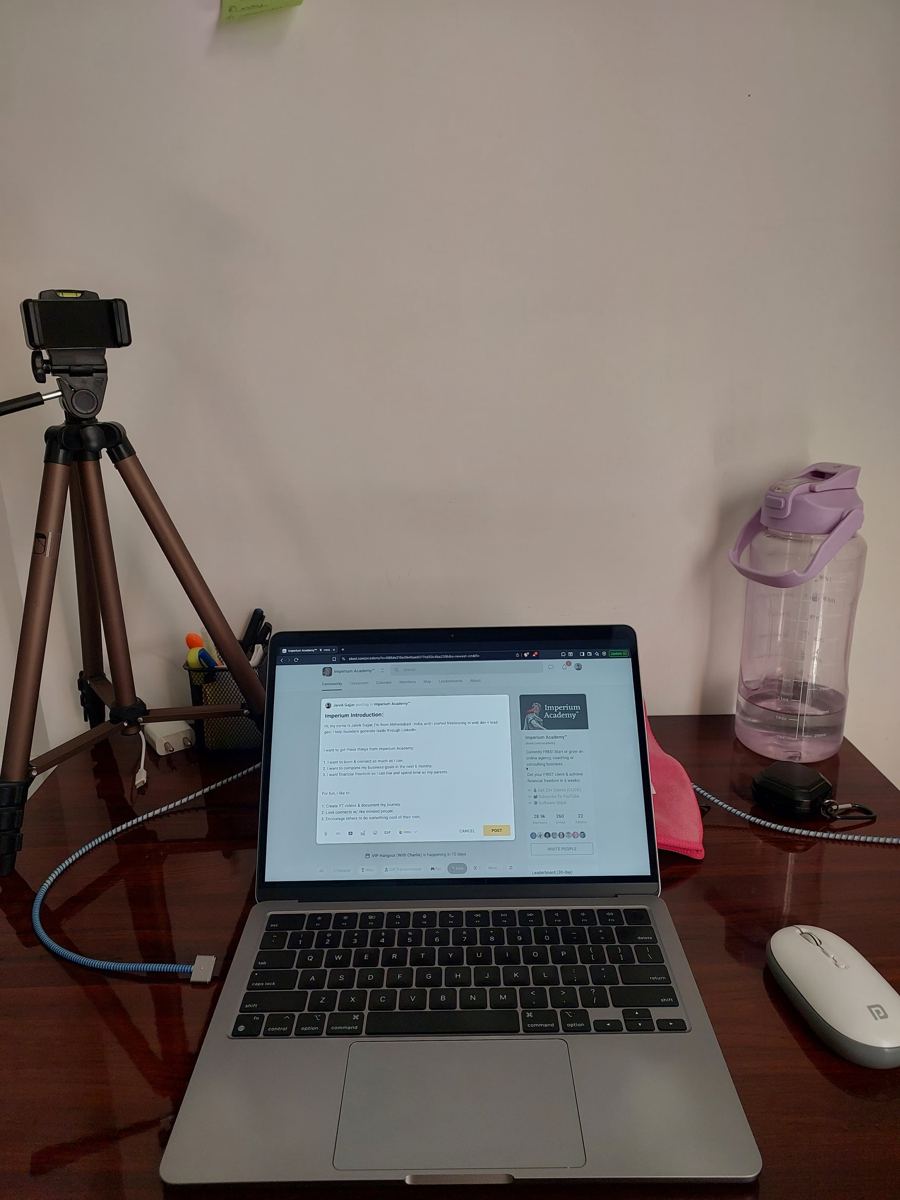
The internet became my classroom
When I started exploring graphic design and web design, there was an overwhelming amount of information available. There were tutorials for almost every tool and skill I wanted to understand.
That was both useful and confusing.
You could spend hours watching someone explain a process and feel like you had learned a lot. But watching a tutorial and being able to do the work yourself are two very different things.
I gradually understood that the real learning happened when I tried to apply what I had watched.
I would move from watching to experimenting. I would try to recreate an idea, understand why something worked or figure out where I had gone wrong. That process made the concepts more practical.
It also taught me to become comfortable with not knowing everything before starting.
Learning a tool is not the same as learning a skill
As I explored tools like Webflow and other no-code platforms, I started noticing an important difference.
A tool can help you execute an idea, but it cannot automatically give you the judgement to decide whether that idea is good.
Knowing how to use a website builder is useful. Understanding what a website needs to communicate, how its pages should be structured and what a visitor should do is a different skill.
The same applies to design. Learning where to find a setting or how to use a feature is only the beginning. You also need to develop an eye for what works and an understanding of the problem you are trying to solve.
I was still early in that process, but it changed how I approached learning. Instead of collecting tutorials, I wanted to build the ability to use what I was learning.
The advantage of starting before you feel ready
One thing that online learning gave me was the freedom to explore different directions without waiting for someone to give me permission.
I could try graphic design, move towards websites, experiment with no-code tools and follow a new curiosity whenever it appeared. Not every experiment turned into something useful, but each one helped me understand my interests a little better.
The process was not always efficient. There were times when I spent too long researching or learning a tool without applying it. But I slowly became more aware that progress came from doing the work, not just consuming information about it.
That lesson stayed with me when I began thinking about working with clients and starting something of my own.
Eventually, the question changed. It was no longer only about what I could learn or create. I started wondering whether I could turn those skills into a service, find people who needed that service and build something around it.
That was a much bigger question than choosing which tutorial to watch next.
Next chapter: In 2024, I decided to start Marcsix, a content marketing agency. I was about to learn that starting an agency and knowing how to run one are two very different things.